South African Afro House has specific production characteristics that distinguish it from Nigerian, Ghanaian, East African, and other regional Afro House scenes. The production patterns are worth documenting because they are part of what makes the South African scene distinctive and because the patterns inform how producers in other regions either adopt or react against what South Africa has built.
This piece is for readers interested in production-level analysis. It assumes some familiarity with electronic music production vocabulary. If you are a producer or DJ with serious interest in the scene, this is for you.
The percussion approach
South African Afro House percussion is built around specific patterns that distinguish it from the broader house tradition. The kick patterns typically run at tempos around 120-126 BPM with a specific weight and tonal character. The kicks are often more saturated and more present in the low-mid range than standard house kicks.
The percussion layers around the kick include specific elements that define the South African sound. Shakers and rattles play a more central role than in standard house production. The shakers often carry rhythmic information that would be carried by hi-hats in other house styles. The rattle work derives partly from traditional South African percussion patterns and brings specific cultural weight to the productions.
The hi-hat work is typically more restrained than in EDM-influenced house styles. Where US and European house often use complex hi-hat patterns as primary rhythmic interest, South African Afro House often uses simpler hi-hat work and lets the shakers and other percussion carry the secondary rhythmic interest.
The aggregate percussion approach produces a rhythmic foundation that feels different from house from other regions. Producers who try to replicate the South African sound from outside often miss the percussion approach and end up with productions that have South African surface elements but do not actually feel like South African Afro House.
The harmonic vocabulary
South African Afro House uses specific harmonic vocabulary that reflects influences beyond standard house traditions. The chord progressions often include extended chords — minor sevenths, minor ninths, various extensions — that the standard house vocabulary uses less heavily.
The melodic content frequently includes pentatonic and modal elements that derive from broader South African musical traditions. The melodic lines often use patterns that would not appear in European house but that are familiar from South African gospel, mbaqanga, and various other South African musical contexts.
The harmonic rhythm — how often the chord changes happen — is typically slower than in pop-oriented house styles. The slow harmonic movement allows for the percussion-driven build patterns that define the genre while maintaining harmonic coherence across long-form tracks.
The aggregate harmonic vocabulary produces a sound that is specifically South African even when individual elements would not be unfamiliar to producers from other regions. The combination is distinctive even where individual elements are not.
The vocal treatment
South African Afro House uses vocal elements with specific treatment patterns that distinguish the scene's production approach.
The vocal samples often include extended vocal phrases rather than the short vocal stabs that characterise other house styles. The extended phrases carry meaningful melodic and lyrical content rather than functioning purely as rhythmic elements.
The vocal processing typically emphasises the natural character of the vocals rather than heavily processing them. Reverb, delay, and various ambient processing are used but the vocals are typically still recognisable as vocals rather than processed beyond their original character. The processing approach reflects the value the scene places on the vocal content as content rather than as raw material for production.
Many tracks include lengthy vocal sections that occupy substantial portions of the track length. The track structures accommodate the vocal sections through the slower harmonic rhythm and the percussion-driven foundation that supports vocal foreground without competing with it.
The track structure and length
South African Afro House tracks are typically longer than house tracks from other regions. Track lengths of seven to nine minutes are common. Some productions extend significantly beyond this. The longer durations support the build patterns and the extended vocal sections that the genre uses.
The track structures typically follow specific patterns. Long introductions that establish the percussion and harmonic foundation. Gradual builds through the addition of vocal and melodic elements. Extended midsection where the full instrumentation is operating. Various breakdown and rebuild patterns that maintain energy across the long track length. Outro sections that allow DJ mixing into subsequent tracks.
The structural approach reflects the DJ-oriented nature of the production. South African Afro House is produced primarily for DJ contexts rather than for radio or streaming optimisation. The structures support the DJ patterns that drive the music's actual cultural life on dance floors.
The mix character
South African Afro House mixes have specific character features that distinguish them from other house production approaches.
The low end is typically present and weighted but not as aggressive as in EDM-influenced styles. The kick and bass relationship is balanced to produce energy without overwhelming the other elements. The mix space accommodates the percussion layers and the vocals that carry significant content.
The midrange is typically warm and not heavily processed. The percussion elements occupy substantial midrange space without being processed into harsh territory. The vocal elements sit in the midrange in ways that maintain their natural character.
The high end is typically smooth rather than bright. The cymbal and high-percussion elements are present but not aggressively foregrounded. The mix approach produces a sound that works well in extended DJ contexts rather than producing the immediate impact that festival-oriented mixes prioritise.
The aggregate mix character is what producers in other regions sometimes call "warm" or "organic" when describing the South African sound. The descriptions are accurate but do not fully capture the technical mix decisions that produce the character.
The production tools
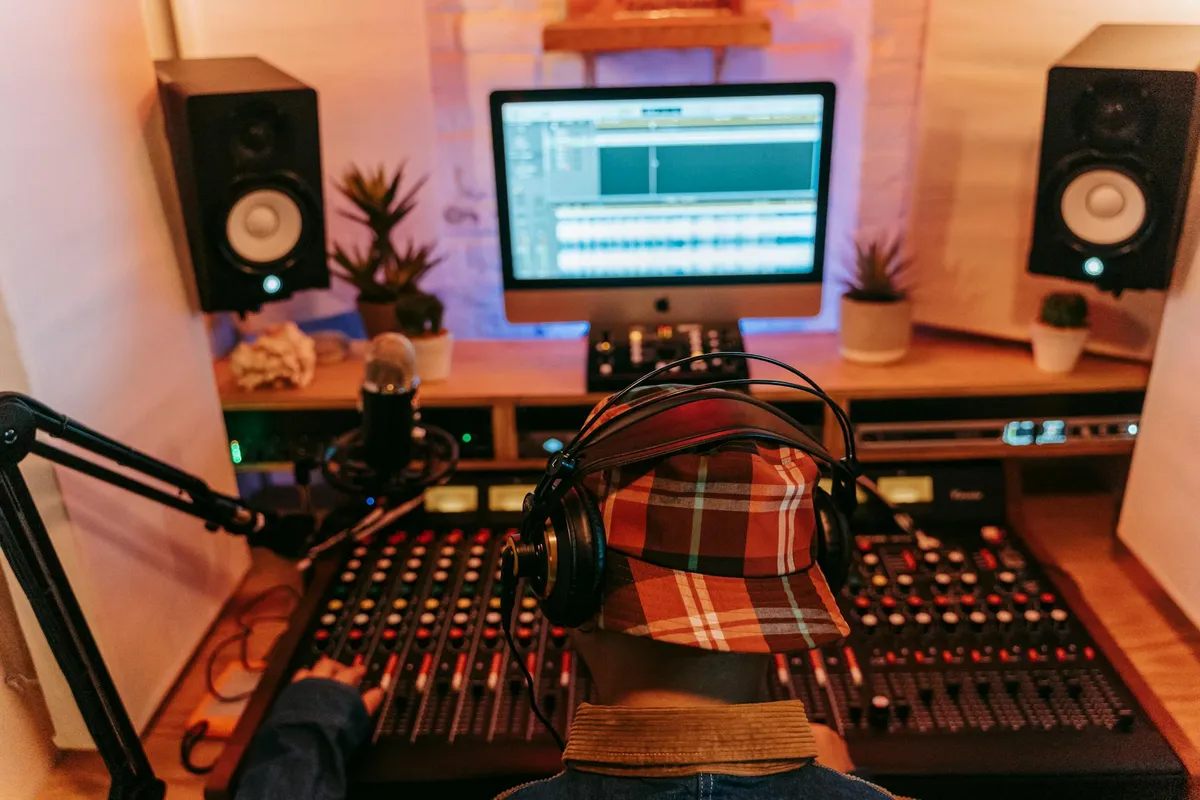
The production tools used in South African Afro House include both standard electronic music production software and specific tools that the scene has developed familiarity with. Logic, Ableton, FL Studio, and Cubase are all used. Specific virtual instruments, sample libraries, and processing tools have become particularly common in the scene.
The scene has also developed its own ecosystem of sample packs, drum kits, and various other resources that producers can use to access the South African sound. The resources have lowered the barrier to entry for producers learning the style and have also accelerated the spread of South African production patterns to producers outside South Africa.
The accessibility of the production tools and resources has enabled the broader internationalisation of the South African Afro House sound. Producers in West Africa, in Europe, in the Americas, and elsewhere have built familiarity with the South African production patterns through engagement with the tools and resources.
The cultural and musical context
The production patterns described above did not develop in isolation. They reflect specific cultural and musical contexts that shaped the South African scene's development.
South African house culture emerged within a broader South African musical context that included strong traditions in gospel, jazz, mbaqanga, kwaito, and various other genres. The producers building Afro House drew on this broader context, often producing across multiple genres or maintaining ongoing engagement with the broader South African music scene.
The DJ culture in major South African cities — Johannesburg, Durban, Cape Town — provided the venues where the music was tested and refined across years. The DJ patterns that drive the music's development reflect what worked in these specific scenes across extended periods of practical experimentation.
The broader social context affected the music in various ways. The post-apartheid cultural development period produced specific cultural energies that house music engaged with. The Pan-African cultural identity that has developed across recent decades provided framing for what the music was doing within broader African cultural contexts.
None of this is reducible to single causal factors. The cultural context shaped the music while the music also shaped the cultural context. The interaction across decades produced what we now call South African Afro House.
What other regions have done with the South African sound
The South African Afro House sound has been adopted, adapted, and reacted against by producers in other African regions and beyond. The patterns of adoption vary by region.
Nigerian producers have largely incorporated some South African production elements while maintaining strong connection to Nigerian musical traditions. The result is Nigerian Afro House that is recognisably influenced by South African approaches but is not South African Afro House.
Ghanaian producers have developed their own approach that draws on South African patterns while incorporating Ghanaian musical elements. The Ghanaian scene has its own distinctive character even where South African influence is visible.
East African producers have engaged with South African Afro House while developing scenes that have their own characters drawing on East African musical traditions.
Producers outside Africa have also engaged with the South African sound. European producers, US producers, and various others have produced work in South African Afro House styles. The international productions vary in their fidelity to the scene's actual patterns. Some are excellent. Some are surface-level imitation that misses the core characteristics described above.
What I think about the broader influence
The international spread of South African Afro House has been substantial and is continuing. The spread is positive for the scene in several ways and produces some friction in others.
The positive aspects include broader audiences for South African producers, increased commercial opportunities, and greater recognition of South African musical contributions to global electronic music culture.
The friction includes appropriation patterns where international producers make South African Afro House without engaging meaningfully with the scene's actual context, attribution problems where international productions are credited as innovations that originated in South Africa, and the various distortions of the scene's self-understanding that international engagement sometimes produces.
Navigating the friction productively requires honest engagement on multiple sides. South African producers benefit from international engagement that respects the scene's context. International producers benefit from engaging with the scene's context rather than only its surface characteristics. International coverage benefits from accurate framing of what the scene actually is rather than the simplified versions that flatter international audience preferences.
The aggregate trajectory is positive for the music. The scene continues to develop. The broader audience continues to grow. The international engagement is producing more value than friction across the broader picture. The continuing evolution of South African Afro House is itself part of what makes the scene worth sustained attention from anyone who cares about contemporary African dance music.
For producers and DJs reading this who want to engage seriously with South African Afro House, the production patterns described here are starting points rather than complete descriptions. The actual scene is richer than any documentation can capture. Sustained engagement with the scene's output and with the producers who are building it is what produces real understanding. The documentation supports the engagement but does not replace it.